

A fence should make life easier, not add another weekend chore. For Seminole County homeowners, the best low maintenance fences stand up to strong sun, heavy rain, humidity, and everyday family use without regular staining, painting, or repairs. Vinyl/PVC and aluminum are usually the leading choices, but the right one depends on whether privacy, security, pool safety, or curb appeal matters most.
A low-maintenance fence is not the same as a no-maintenance fence. Every fence needs an occasional check for loose hardware, shifted gates, storm debris, and buildup from Florida’s wet weather. The goal is to choose a material that needs simple cleaning and basic care instead of frequent refinishing.
What Makes a Fence Low Maintenance?
Florida weather is hard on exterior materials. Heat can fade surfaces, rain can leave dirt and mildew, and high humidity can speed up rot in materials that hold moisture. A low-maintenance fence resists these conditions without requiring repeated protective coatings.
The material matters, but installation matters too. Posts need proper placement, gates need sound hardware, and the fence line must work with the grade of the yard. A well-planned layout helps avoid standing water, uneven sections, and gates that drag after a rainy season.
For many homes in Sanford, Oviedo, Altamonte Springs, and nearby Seminole County communities, the best choice comes down to vinyl for privacy or aluminum for an open, secure boundary.
Vinyl/PVC: The Best Low Maintenance Fence for Privacy
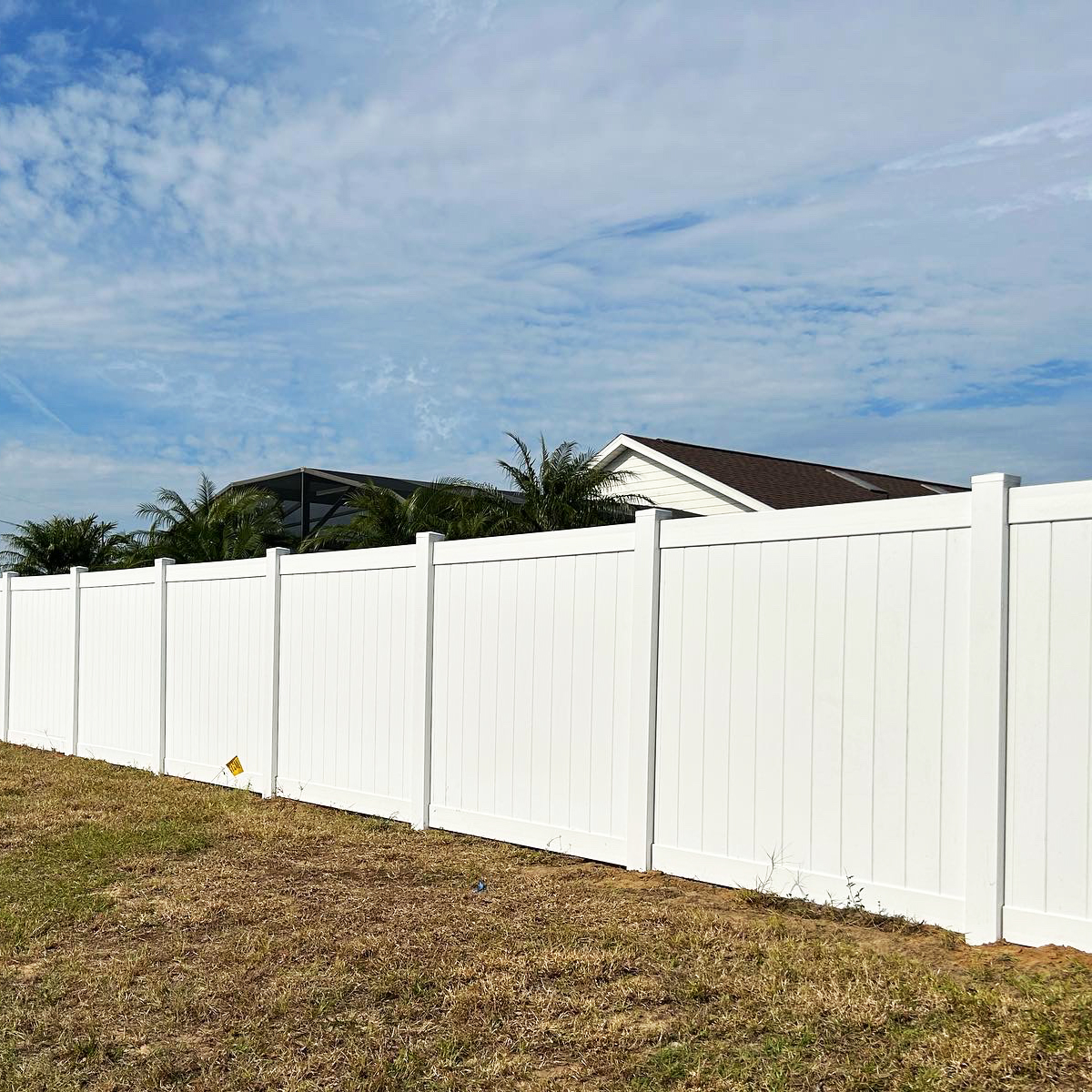
Vinyl/PVC fencing is often the first choice when homeowners want a solid privacy barrier with limited upkeep. It does not need paint or stain, and it will not rot, splinter, or attract termites the way wood can. A white vinyl privacy fence can also create a clean, consistent look around a backyard, patio, or play area.
Most routine care is simple. Rinse the fence with a garden hose, then use mild soap and a soft brush for dirt or mildew that does not rinse away. Avoid harsh cleaners and abrasive pads, which can damage the surface.
Vinyl works especially well when privacy is the main goal. It can block views from neighboring yards and create a more defined outdoor space. It is also available in styles that offer partial privacy, such as spaced pickets or decorative top sections.
There are trade-offs. Vinyl panels are solid, so they catch more wind than open-style fencing. Proper post depth and installation are important, especially in open yards. Some homeowners also prefer the natural look of wood or the more open feel of aluminum. Still, for a homeowner who wants privacy without a staining schedule, vinyl is difficult to beat.
When Vinyl Makes the Most Sense
Choose vinyl/PVC when you want a private backyard, a defined space for children or pets, or a fence that stays neat with basic washing. It is a practical option for many neighborhood homes where consistency and curb appeal are important.
If your neighborhood has an HOA, review its approved fence colors, heights, and styles before making a final selection. An HOA is a homeowners association, and its design rules can be more specific than local building rules.
Aluminum: Low Care With an Open View
Aluminum fencing is another strong option for Seminole County properties. It does not rust like standard steel, and quality aluminum fencing is made to handle outdoor moisture. Its open picket design allows air to move through the fence, which can be helpful in windy areas.
Aluminum is a good fit for front yards, pool areas, side yards, and properties with a view worth keeping. It provides a clear boundary without making the yard feel closed in. Many homeowners choose it for its clean lines and more formal appearance.
Care is usually limited to rinsing away dirt and checking the gate latch and hinges from time to time. If lawn equipment scratches the finish, address the spot before it becomes a larger cosmetic issue. Trees and shrubs should also be trimmed back so branches do not rub against the fence.
Aluminum does not provide the same privacy as vinyl. If a neighbor’s patio, road, or nearby window is the concern, an open fence will not solve that problem on its own. It is often the better choice when visibility, security, and a lighter look matter more than full screening.
Pool Fences Need Extra Attention
An aluminum fence is commonly used around pools because it can provide visibility and a secure enclosure. However, pool barriers have safety rules that may cover fence height, gaps, gates, latches, and access from the home.
Do not assume a standard fence design meets pool-barrier requirements. Confirm the current rules with the local authority before installation. A pool enclosure is a safety feature, so the details matter.
Wood Can Work, But It Needs More Care
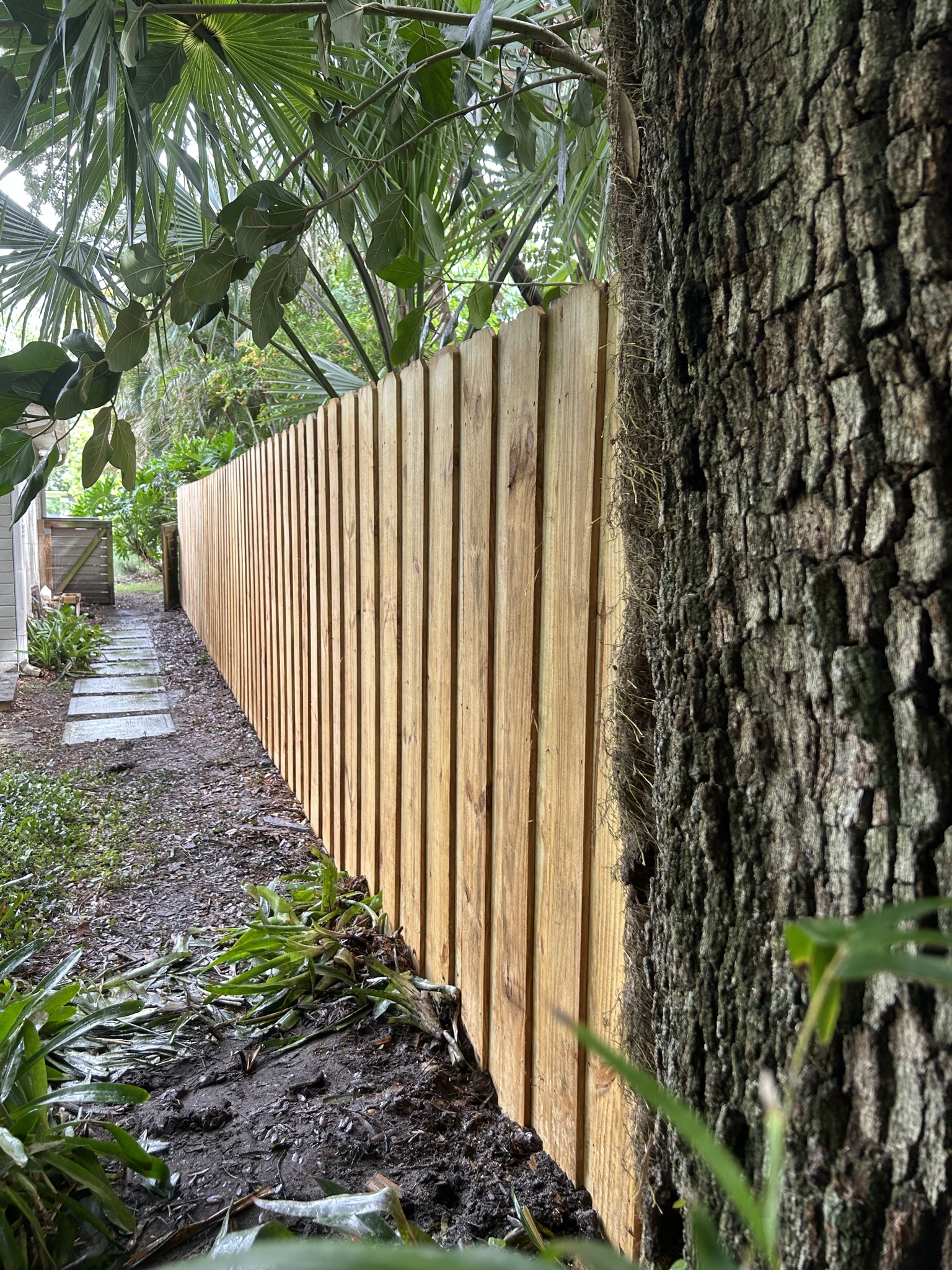
Wood fencing remains popular because it offers a warm, traditional appearance and strong privacy. It can be a good choice for homeowners who want a natural finish or a style that better matches an older home.
But wood is not usually the best choice for low maintenance in Central Florida. It needs regular inspection for moisture damage, warping, loose boards, insects, and fading. Depending on the product and exposure, it may also need sealing, staining, or painting over time.
That does not mean wood is a poor fence material. It simply asks more from the owner. If you enjoy maintaining the look of real wood, it may be worth the work. If your priority is fewer chores over the years, vinyl or aluminum is often a better match.
Start With the Boundary, Not the Fence Style
Before choosing panels, confirm where the fence can go. Existing fences, mulch lines, and a neighbor’s verbal opinion are not reliable proof of a property line. A fence layout mark-up helps show a proposed fence route, but it is not a boundary survey.
A boundary survey is prepared by a licensed surveyor. It identifies property lines and can help prevent an expensive mistake, such as installing a fence over a boundary or inside a required setback. A setback is the required open space between a structure or fence and a property line, road, water area, or other feature.
This step is particularly helpful when lot corners are unclear, a prior fence looks questionable, or the property backs up to a drainage area. Drainage easements and utility areas may limit where a fence can be placed, even when the land is part of your lot.
HOA and Permit Questions in Seminole County
Fence approvals can involve more than one office or rulebook. Your HOA may require an application and approval before work begins. Local rules may address height, location, visibility near streets, drainage, and pool barriers. Requirements can also vary by city, neighborhood, and property type.
Florida has a limited construction exemption under F.S. 553.79(1)(g) for qualifying work on a single-family dwelling owner’s property valued under $7,500. It is not an automatic permit-free rule for every fence. The exemption does not apply to flood-hazard properties or work involving electrical, plumbing, structural, mechanical, or gas work.
A written exemption request with documents showing the scope and value of the work is required. A larger project cannot be split into smaller jobs to avoid permit requirements. Zoning permits, setbacks, drainage rules, HOA approval, and local treatment of fences or pool barriers may still apply. Always confirm current guidance with the proper local authority before work starts.
Primo Fence can help homeowners understand the approval process and plan the project around it. The goal is a clear agreement, a sensible timeline, and fewer surprises once installation begins.
How to Choose Between Vinyl and Aluminum
Think about what you want the fence to do every day. If you want to sit in your backyard without seeing nearby homes, vinyl privacy fencing is usually the better fit. If you want to secure a pool, mark a property edge, or protect a yard while keeping the view open, aluminum may be the stronger choice.
Also consider gates. A gate gets more use than any other part of the fence. Plan for the right width for lawn equipment, trash bins, pets, or service access, and make sure the latch is easy for adults to use while remaining secure.
Color and style should support the home rather than compete with it. White vinyl can brighten a yard and suit many neighborhood styles. Black aluminum can frame landscaping and blend into the background. Looking at the fence from the street, the driveway, and the main outdoor living area helps make the choice clearer.
The best low-maintenance fence is the one that fits your property, your privacy needs, and the rules that apply to your lot. Start with a confirmed boundary, ask about HOA and local requirements early, and choose a material you will still appreciate after several Florida summers.
Explore Seminole County fence installation and pricing, then use the calculator below to plan your project.
Estimate your Seminole County fence
Select your fence details and enter a length, or draw your fence line on the map. Your estimate will use Seminole County pricing.
Search for your property, choose the line tool, and draw the proposed fence. Double-click to finish each line. The total drawn length fills the calculator automatically.

Click on the map to start drawing your fence line. Double-click to finish each segment of the fence line.
Fence Configuration
Estimate
Drawn length: 0 ft

0 Comments