
A pool can be the favorite part of a Seminole County home, but it also needs a clear safety plan. The best fences for pool safety do more than mark the edge of the water. They create a barrier that helps keep young children, guests, and pets from reaching the pool without an adult present.
The right choice depends on your yard, your pool layout, your HOA, and how you use the space. A backyard privacy fence may improve security around the property, but it does not always work as the pool barrier. Many families get the best result from a dedicated pool fence with a self-closing, self-latching gate.
What Makes a Pool Fence Safe?
A safe pool fence limits unsupervised access. It should be hard for a small child to climb, squeeze through, or open. The gate matters just as much as the fence panels. A strong fence will not help if a gate stays open or has a latch within a child’s reach.
Florida pool barrier rules commonly use a 4-foot minimum height as a baseline, but the details can depend on the project and the current code. Pool construction plans, local rules, and neighborhood requirements may add other standards. Before choosing a material, confirm the current requirements with the local building and zoning offices that oversee your Seminole County property.
A pool barrier should also have a clear space around it. Avoid placing chairs, storage boxes, grills, planters, or other items next to the fence where a child could use them to climb over. Keep the gate area clear and make sure adults know to close it every time.
Best Fences for Pool Safety: Material Choices
There is no single best material for every pool. The safest option is one that meets the required barrier rules, fits the layout, and will be used correctly every day. These are the most common choices for Central Florida homes.
Aluminum fencing for visibility and long-term use
Aluminum fencing is often a strong choice around an in-ground pool. Its open picket design lets parents see the pool area from the patio, kitchen window, or yard. That visibility can make supervision easier during parties and busy family days.
Aluminum does not rot, and it handles Florida heat and rain well. It can also follow a sloped yard better than many rigid fence styles. For pool use, spacing between pickets and the shape of the fence should be reviewed carefully so the system meets barrier requirements.
The trade-off is privacy. Aluminum fencing keeps the pool visible, which is helpful for safety, but it does not block views from nearby homes. Some homeowners pair an aluminum pool fence with a separate privacy fence at the property line.
Vinyl fencing for privacy around the pool
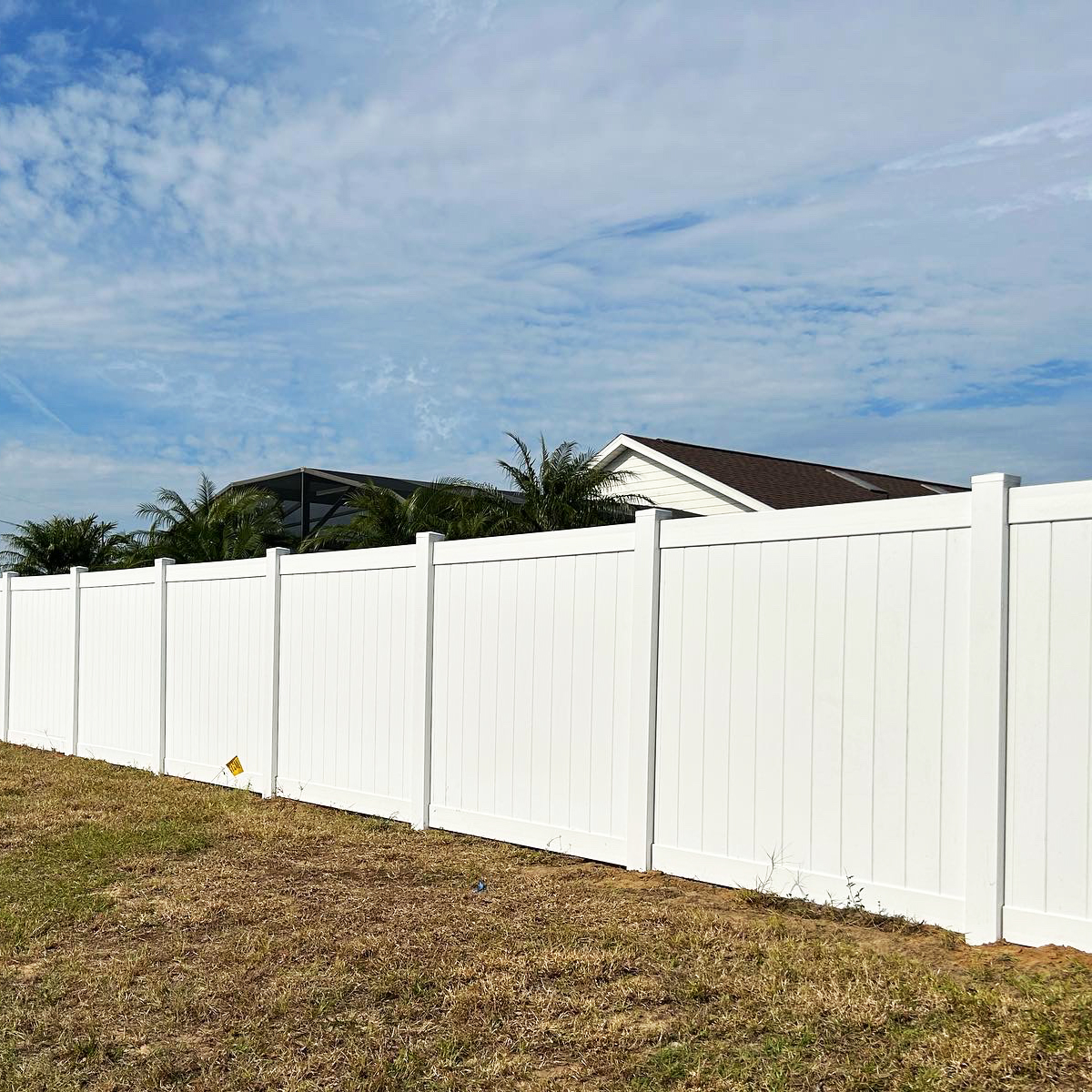
Vinyl or PVC fencing gives a pool area a more private feel. It can block views from neighboring homes and create a defined outdoor room. This can work well for families who want privacy for swimming, lounging, and entertaining.
A solid vinyl fence needs thoughtful design near a pool. Because it blocks sightlines, it may be harder to see the water from outside the enclosure. Some homeowners choose vinyl around the yard and use aluminum closer to the pool, especially when they want better visibility from the house.
Vinyl is low-maintenance, but it still needs quality installation. Posts must be set correctly, and gates need hardware that works reliably in daily use. A pool gate should close and latch on its own rather than relying on someone to remember.
Removable mesh fencing for flexible protection
Removable mesh pool fencing is designed as a dedicated barrier around the water. It is popular with families who have toddlers, visiting grandchildren, or pets that need an extra layer of protection. The fence can be placed close to the pool deck, helping separate the water from the main patio and yard.
Mesh fencing offers good visibility and can be removed when the family wants a more open pool area. That flexibility is useful, but it also creates responsibility. If the fence is taken down, it should be reinstalled correctly before children or pets use the pool area again.
This option may not provide the privacy or permanent property-boundary function of aluminum, vinyl, or wood. It is usually best viewed as a pool-specific safety feature, not a replacement for every fence need on the property.
Wood fencing when privacy is the main goal
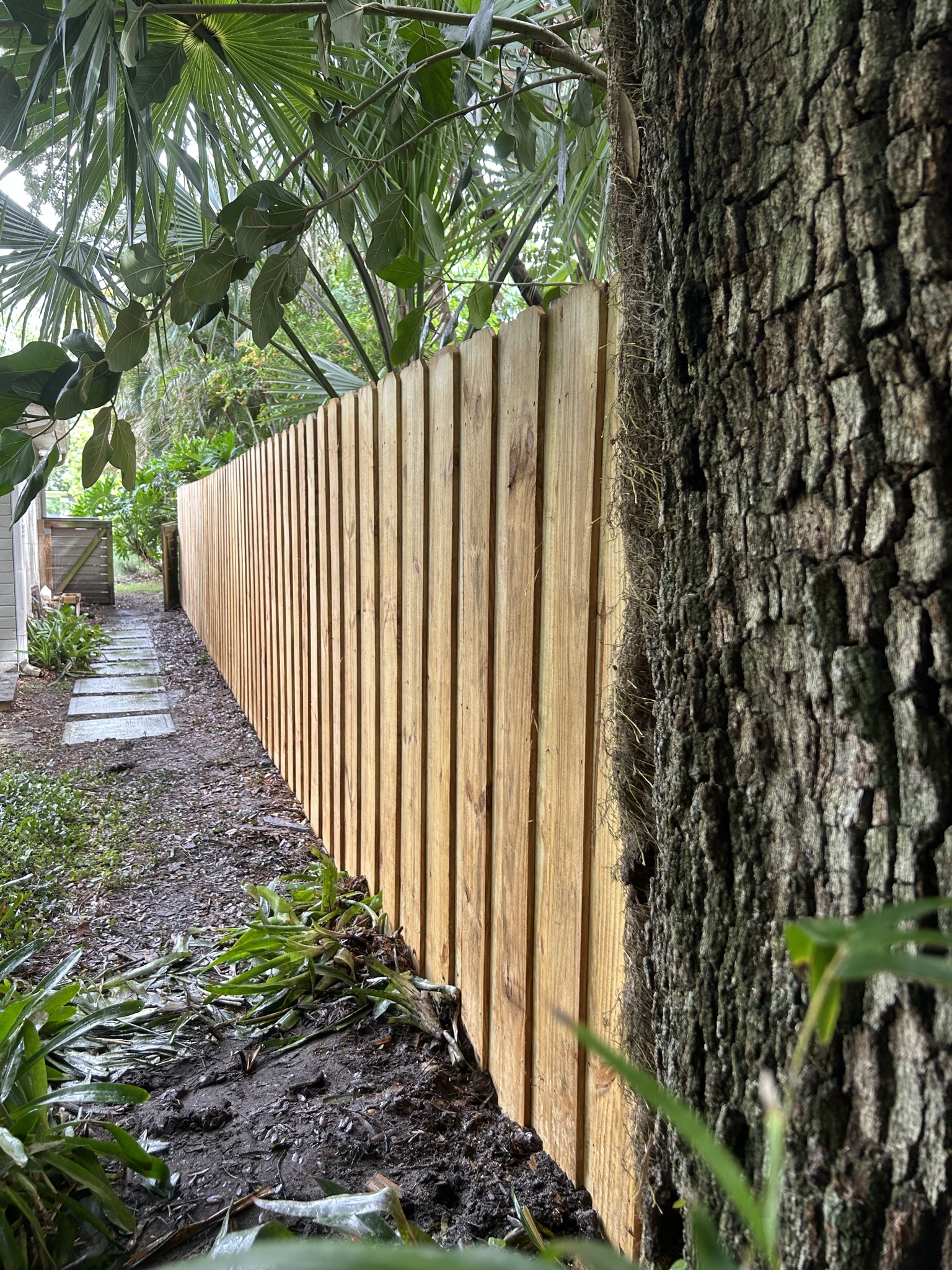
Wood fencing can provide warmth and privacy, and it may suit a home with an established landscape. However, it needs more upkeep in Central Florida’s moisture, sun, and storm conditions. Warped boards, loose pickets, and aging gate hardware can create safety concerns if they are not repaired quickly.
A wood fence can be part of a safe pool plan when it is built to the correct height and spacing and includes a proper gate. Still, homeowners should plan for regular inspections, sealing or staining when needed, and fast repairs after storms.
Do Not Treat the Backyard Fence as an Automatic Pool Barrier
A fence around the outside of the yard may help protect the pool, but it does not always control access from the home. If a child can walk from a back door directly to the pool, a perimeter fence alone may leave a gap in the safety plan.
Some homes use more than one protection measure. For example, an aluminum fence may surround the pool itself, while a vinyl privacy fence encloses the yard. Door alarms, pool alarms, approved safety covers, and adult supervision can also play a role. The right combination depends on the pool design and the applicable rules.
Think through how people enter the pool area. Consider patio doors, side gates, pet doors, and pathways from the driveway. A good layout prevents easy access while still allowing adults to move through the yard without frustration.
Gates Are the Most Important Detail
A pool fence gate should self-close and self-latch. The latch should be placed and installed so a young child cannot easily reach or operate it. Gates should swing away from the pool when required by the approved design, and they should never be propped open during a gathering.
Test the gate often. Open it fully, let it close on its own, and check that the latch catches every time. Leaves, settling, loose hinges, or worn hardware can affect performance. A quick check before a weekend swim can prevent a serious problem.
If you have a double gate for lawn equipment, secure both sides when it is not in use. A wide gate can be convenient, but it should not become an easy access point to the water.
Start With the Property Line and Layout
Before a new fence is planned, know where the property boundaries are. A fence layout mark-up shows a proposed fence path. It is not a boundary survey and does not replace a survey prepared by a licensed surveyor.
This matters when a pool fence connects to a side-yard fence, follows a property line, or sits near a utility easement. Building in the wrong location can create a costly correction later. If boundary markers are missing, unclear, or disputed, ask a licensed surveyor to review the property before installation.
Also consider pool equipment, drainage swales, sprinkler heads, and access for future repairs. A fence should make the pool safer without blocking needed service access or changing how water drains through the yard.
Seminole County Permits, HOAs, and the Under-$7,500 Exemption
Fence and pool barrier projects can involve permits, zoning review, setbacks, drainage rules, and HOA approval. An HOA is a homeowners association. It may set rules for fence height, color, material, gate placement, and which side of the fence faces outward. HOA approval is separate from government approval.
Florida Statute 553.79(1)(g) includes an exemption for certain qualifying work on a single-family dwelling owner’s property when the value is under $7,500. It is not an automatic permit-free rule for every fence. The exemption does not apply to flood-hazard properties or work involving electrical, plumbing, structural, mechanical, or gas systems. It also requires a written exemption request with documents showing the scope and value of the work, and a larger project cannot be split into smaller jobs to avoid permits.
Local officials may still require zoning review or have separate rules for fences and pool barriers. Confirm current Seminole County and city guidance before work begins. A clear plan early on can prevent delays after materials are ordered.
Primo Fence helps homeowners move through the estimate, agreement, approval, and installation process with clear communication. Bringing your survey, HOA rules, pool plans, and any existing permit information to the first conversation can make planning much smoother.
A safe pool fence should feel simple to use every day: close the gate, hear the latch catch, and know the pool area has a reliable barrier in place. That daily peace of mind is worth planning for before the first swim of the season.
Explore Seminole County fence installation and pricing, then use the calculator below to plan your project.
Estimate your Seminole County fence
Select your fence details and enter a length, or draw your fence line on the map. Your estimate will use Seminole County pricing.
Search for your property, choose the line tool, and draw the proposed fence. Double-click to finish each line. The total drawn length fills the calculator automatically.

Click on the map to start drawing your fence line. Double-click to finish each segment of the fence line.
Fence Configuration
Estimate
Drawn length: 0 ft

0 Comments