
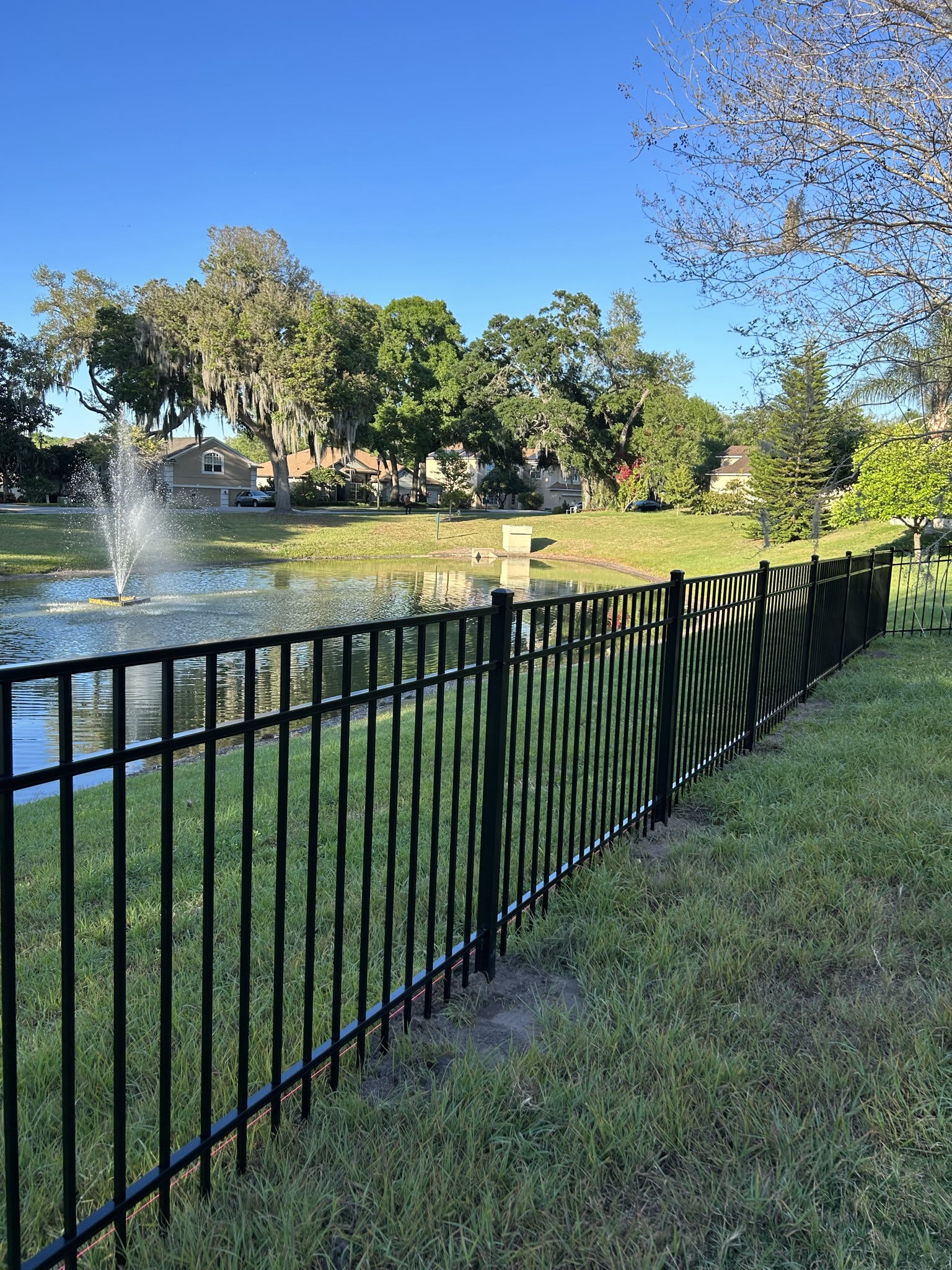

A gate may be the part of your fence you use most. It needs to open easily, close firmly, and suit the way you use the yard. Aluminum gates offer an open look with less routine care than some other materials.
Before choosing a style, plan the gate’s size, location, and swing direction. Strong posts and good hardware matter as much as the gate itself. These details help prevent dragging, sagging, and a latch that will not catch.
Why Choose Aluminum?
Aluminum does not rust like iron, which is useful in Florida’s wet climate. Its finish and hardware still need care. Rain, dirt, sprinkler water, and coastal air can affect exposed parts over time.
An aluminum gate keeps the view open. It can suit a pool area, garden, side yard, or business entrance. It lets you see through the boundary instead of closing off the space.
For full privacy, consider vinyl fencing or a wood design. Some properties use an open gate near the front and privacy fencing along the back. Check local and HOA rules before combining styles.
Choose the Right Gate for the Job
Walk Gates
A walk gate gives people access to a yard, garden, or pool area. Make it wide enough for the things that must pass through. Measure your mower, trash bins, and other equipment before you pick the opening size.
Pool gates must meet the rules for the property. Ask about self-closing hinges, latches, latch height, and the gap below the gate. These are safety details to plan early, not changes to make after the work is done.
Driveway and Service Gates
A drive gate may serve a home, parking area, or storage yard. Wider openings may need two gate panels. Plan enough space for vehicles to turn and for the gate to open fully.
Check for parked cars, sidewalks, garages, and slopes in the swing path. A sliding gate needs room to move along the fence. Ask which design fits the site and whether the contractor offers that type.
Height and Style
Flat tops, arches, and pointed designs create different looks. Match the gate to the fence and the home where possible. Check any limits on height, color, and style before buying.
A taller gate may add security, but height alone is not enough. The gaps, latch, posts, and surrounding fence all affect access.
Use Posts and Hardware That Fit
Every time a gate moves, it puts stress on its hinges and posts. Posts that are too small can shift. Poor hardware may lead to a gate that drags or does not latch.
Choose parts suited to the gate’s size, weight, and level of use. A business gate used all day may need heavier parts than a home walk gate. Soil, tree roots, and drainage also affect how the posts should be set.
If you want an automatic gate, discuss power, safety devices, and service needs at the start. Use qualified help for electrical and safety work. Follow the maker’s instructions for the full system.
Plan Approvals Before Installation
A homeowners association, or HOA, may require a survey, drawing, and product details. Ask for its current rules. A neighbor’s approved fence does not prove the same gate will be allowed on your lot.
Permit needs vary by address and project. Pool barriers and fences near streets can have added rules. Get required approvals before installation starts.
Begin with an estimate and a site review. Ask for a written scope that lists the material, gate size, hardware, price, and timeline. Primo Fence can help explain the HOA and permit steps for your project.
Keep the Gate Working Well
Rinse away dirt and grass clippings as needed. Check hinges and fasteners, and test the latch. The gate should move freely without being lifted or forced into place.
Trim plants out of the swing path. If the gate starts to drag or fails to latch, arrange for an adjustment. Do not keep forcing it closed. That can put more strain on the parts.
For automatic gates, follow the maker’s care schedule and have faults checked promptly. A little routine care can help keep access smooth and dependable.
Start With How You Use the Space
Aluminum can be a good fit when you want open views and a clear entry point. Choose the width, style, and hardware around daily use. Then confirm the site conditions and approval steps. The result should make your property easier to use.
Explore Brevard County fence installation and pricing, then use the calculator below to plan your project.
Estimate your Brevard County fence
Select your fence details and enter a length, or draw your fence line on the map. Your estimate will use Brevard County pricing.
Search for your property, choose the line tool, and draw the proposed fence. Double-click to finish each line. The total drawn length fills the calculator automatically.

Click on the map to start drawing your fence line. Double-click to finish each segment of the fence line.
Fence Configuration
Estimate
Drawn length: 0 ft

0 Comments