
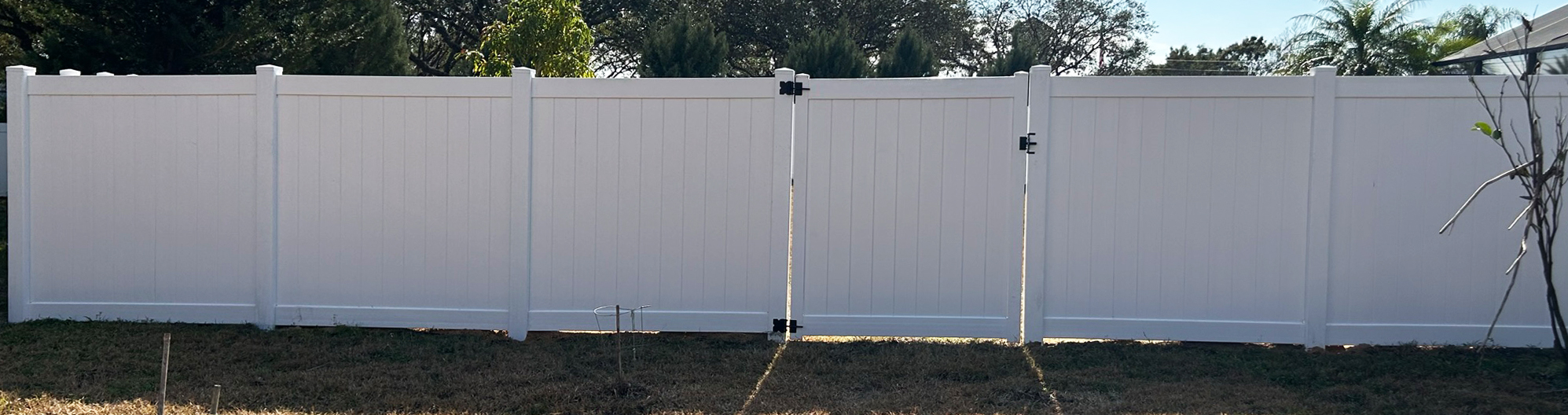

A fence can give you more privacy, help contain a dog, or mark a clear boundary. Good planning helps it do the job without costly changes later. This fence planning guide covers the choices to make before the crew arrives.
Start With Your Main Goal
Think about how you use the space. A solid vinyl or wood privacy fence can block views into a backyard. An open fence may suit a pool, garden, or front yard where you want to keep the view.
List who needs access: family, pets, lawn crews, visitors, or vehicles. Plan gate width and swing direction early. A gate that works for a person may be too narrow for a mower.
Confirm the Boundary
Use your survey or closing papers to check the lot lines. An old fence, hedge, or utility marker is not proof of the boundary. If you are unsure, ask a qualified surveyor before choosing the final route.
Review easements, which give others a right to access part of the land. Drainage areas, trees, roots, walls, sprinklers, and utility boxes can also affect the fence line. Point these out during the estimate.
Talk with neighbors about access and old-fence removal. If you plan to share costs, put the agreement in writing. Settle any boundary questions before work begins.
Compare Fence Materials
Vinyl/PVC
A vinyl privacy fence offers a neat look without routine painting or staining. It resists rot and needs less care than wood. You still need to clean it and check for damage.
Vinyl may cost more at first than some wood options. Repairs may require parts that match the panel style and color. Ask about the exact product and how it will be supported.
Wood
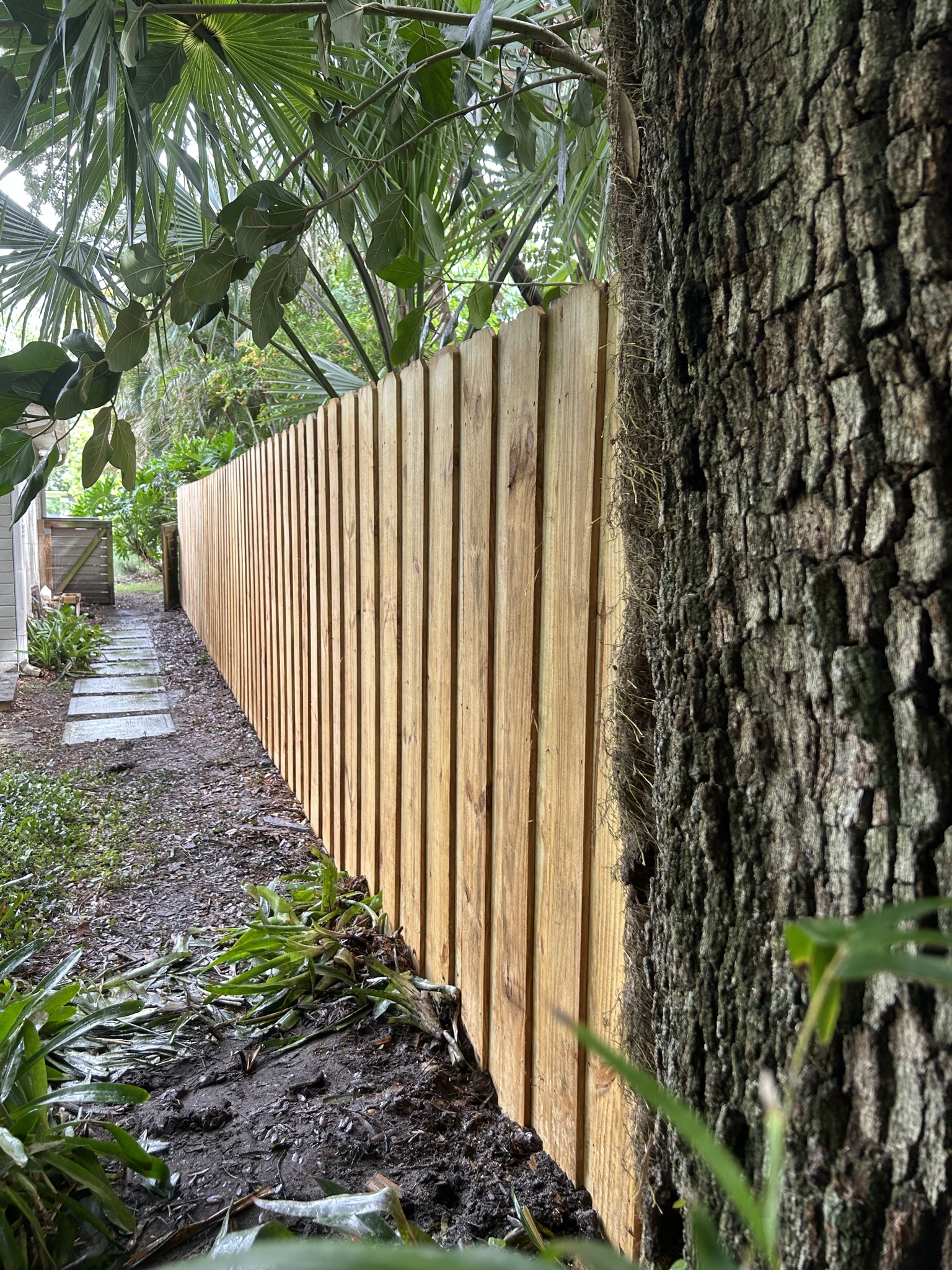
Wood gives a natural look and many layout options. It can offer good privacy at a practical starting price. It needs care in Florida’s heat and rain, though. Ask about sealing, staining, repairs, and the expected upkeep.
Aluminum
Aluminum fencing keeps views open and allows air through. It can suit pools, front yards, and pet areas when the design fits the need. It does not offer the privacy of solid panels.
Discuss gaps, height, and gate hardware before choosing it for pets or a pool. The full design matters, not just the material name.
Start Approvals Early
If you have a homeowners association, or HOA, get its current fence rules. It may limit color, material, height, and placement. You may need a marked survey, product details, and an application.
Check city or county permit requirements for your address. Rules near streets, corners, and pools may affect the plan. HOA approval and local approval are separate steps.
Ask your contractor who handles each submission. Keep written approvals and allow time for review. Primo Fence can help explain the paperwork for your project.
Build a Full Budget
A quote should cover more than fence length. Check gates, removal, disposal, site preparation, hardware, permit costs, and cleanup. Compare the same materials and height across quotes.
Ask how extra work is priced if hidden problems appear. Review payment terms and written warranty coverage. The lowest starting price may leave out work another quote includes.
Weather, approvals, and supplies can affect the schedule. Ask for a realistic timeline and updates when it changes. Shared or business properties also need a plan for work hours, tenant access, and traffic.
Prepare the Yard
Move toys, furniture, planters, and other items away from the fence line. Keep pets safely out of the work area. Tell the crew about narrow paths, parking limits, and locked gates.
Arrange for utility locating before digging. Point out private lines, such as irrigation and yard lighting. Public utility markings may not cover them.
Walk Through the Finished Work
Check the fence with your installer. Test the gates, look at posts and panels, and compare the layout with your agreement. Pay attention to corners, slopes, and places where the fence meets the house.
Ask how to care for the material and keep the warranty papers. A clear plan from the start helps the finished fence fit your yard and your daily life.
Explore Seminole County fence installation and pricing, then use the calculator below to plan your project.
Estimate your Seminole County fence
Select your fence details and enter a length, or draw your fence line on the map. Your estimate will use Seminole County pricing.
Search for your property, choose the line tool, and draw the proposed fence. Double-click to finish each line. The total drawn length fills the calculator automatically.

Click on the map to start drawing your fence line. Double-click to finish each segment of the fence line.
Fence Configuration
Estimate
Drawn length: 0 ft

0 Comments