
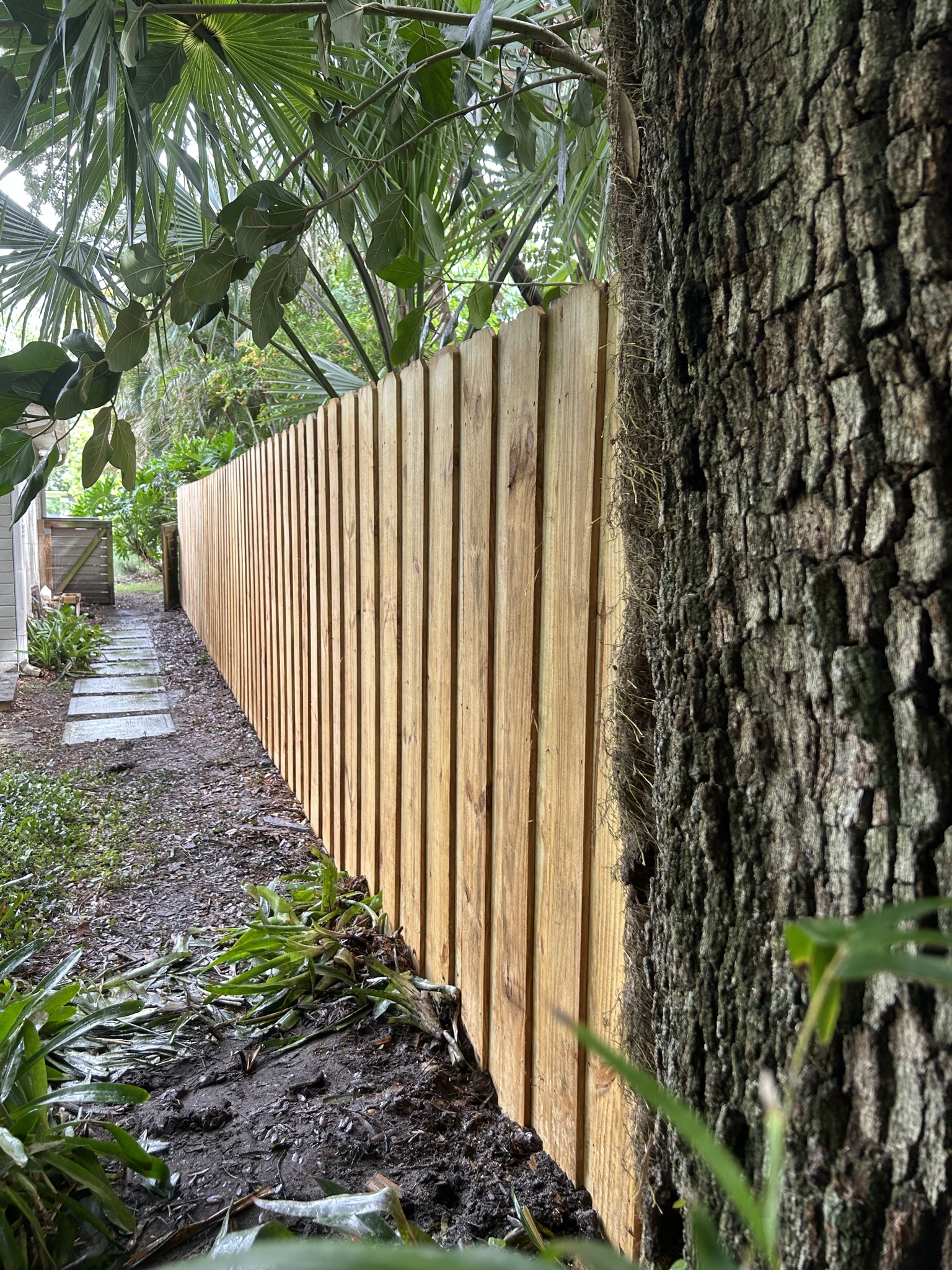

Wood and vinyl can both give your yard privacy and a finished look. The better choice depends on your budget, preferred style, and how much care you want to do. Check your community rules before you choose.
Start With Your Priorities
Vinyl fencing suits people who want privacy with less routine upkeep. It does not need painting, staining, or sealing. It still needs cleaning and checks for loose parts or damage.
Wood fencing offers a natural look and flexible designs. You can often repair individual boards. Wood may cost less at first, but it needs more care over time.
Compare the Look
Wood has grain, texture, and color changes that some owners prefer. Stockade styles place boards side by side. Board-on-board designs overlap them for privacy. Shadowbox styles alternate boards on each side and allow more air through.
Wood can fade, split, or warp as it ages. Stain or paint may help you keep the look you want, but it will need future attention.
Vinyl has a more even color and shape. White is common, with other colors available in some products. Look at the style beside your home, not just in a small sample. Ask your HOA which colors and designs it allows.
Plan for Florida Weather
Heat, rain, shade, and sprinkler spray all affect fence care. Check wood for rot near the ground, loose boards, insect damage, and trapped moisture. Discuss a cleaning and sealing plan with your installer.
Clean vinyl with methods approved by the maker. A hose, soft brush, and mild cleaner often help with dirt and lawn stains. Avoid harsh cleaning or pressure that could damage the surface.
Vinyl does not rot, but impacts and storm debris can break parts. Both materials need proper posts and supports. Choose a system suited to the site; neither material is storm-proof.
Compare the Full Cost
The starting price is only one part of ownership. Wood may need stain, sealant, and more repairs. Vinyl may cost more at first but usually needs less routine work.
Ask each contractor to quote the same height, length, and gate sizes. Check removal, hauling, hardware, permit costs, and cleanup. A lower total may leave out work you need.
Give Gates and Privacy Equal Attention
Either material can block views when built in a solid style. The height and layout matter as much as the material. Plan privacy where you need it without closing off a view you enjoy.
Choose sturdy posts, hinges, and latches. Make gates wide enough for bins, mowers, or future yard work. For pets, check gaps and the space below gates. If the fence is a pool barrier, confirm the required safety features.
Check Approvals Before Buying
A homeowners association, or HOA, may limit material, color, height, and placement. Local permit and zoning rules also depend on your address. Review the survey for lot lines and areas reserved for access.
Start with a free estimate and ask who handles the paperwork. Get a clear agreement before work begins. Primo Fence can help explain the approval steps in your project.
Choose wood if its natural look and flexible styles fit the care you can provide. Consider vinyl if you prefer a consistent privacy fence with less upkeep. The best choice should suit your daily life well beyond installation day.
Explore Volusia County fence installation and pricing, then use the calculator below to plan your project.
Estimate your Volusia County fence
Select your fence details and enter a length, or draw your fence line on the map. Your estimate will use Volusia County pricing.
Search for your property, choose the line tool, and draw the proposed fence. Double-click to finish each line. The total drawn length fills the calculator automatically.

Click on the map to start drawing your fence line. Double-click to finish each segment of the fence line.
Fence Configuration
Estimate
Drawn length: 0 ft

0 Comments