
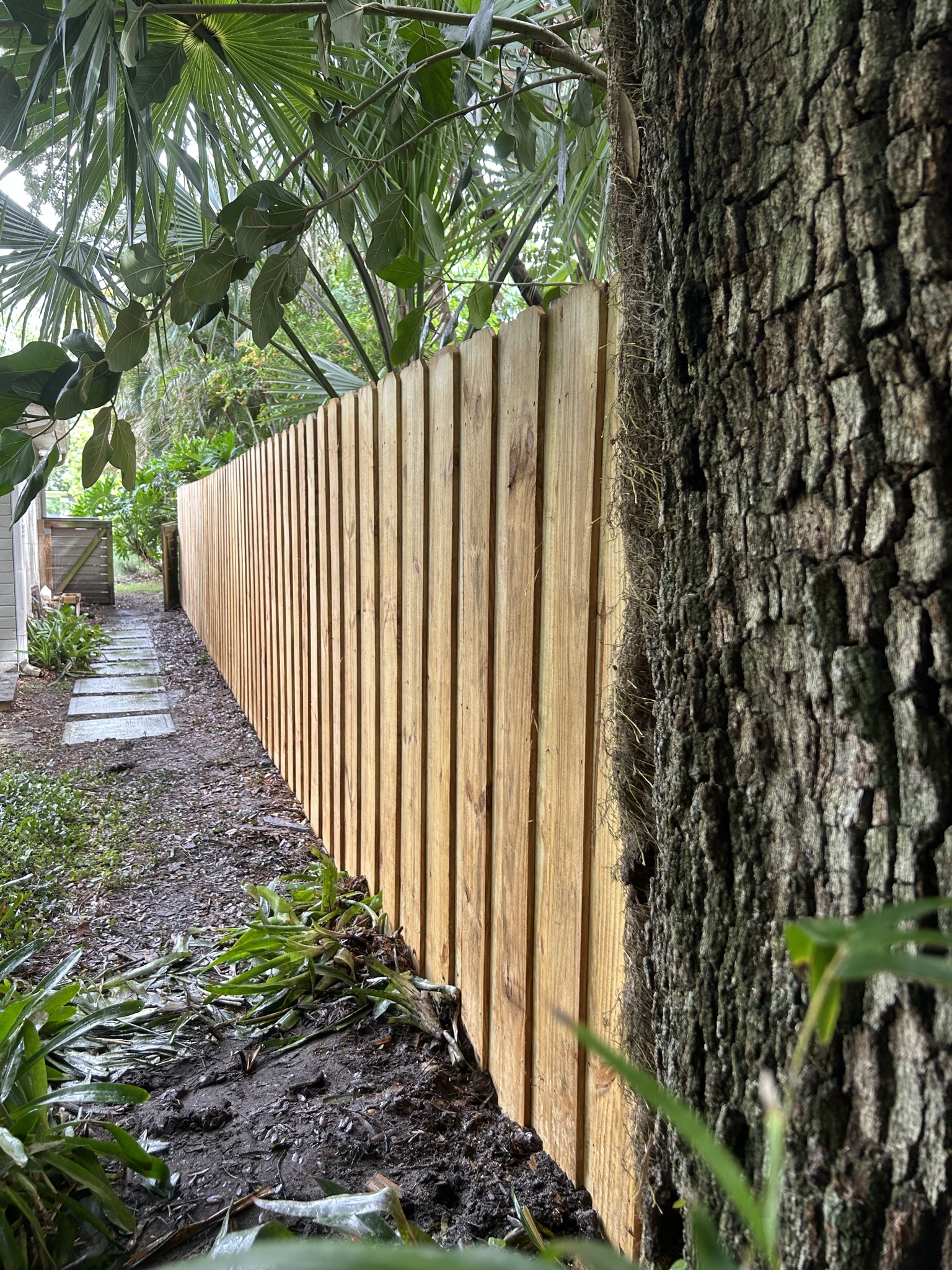

A faded wood fence does not always need replacement. The bigger question is whether its posts, rails, and gates are still strong. Widespread rot, leaning sections, or repeated failures may make a new fence the better choice.
Repair or Replace?
One broken board is often a repair. Several weak posts or damaged rails may point to a larger problem. New pickets on a failing frame can improve the look without restoring strength.
Start with the posts, which carry the fence’s weight. Look for leaning, cracks, or decay near the ground. Poor drainage and sprinkler spray can keep post bases wet.
Check the horizontal rails as well. A single damaged rail may be replaced. Sagging or loose rails across several sections can mean the whole fence needs work. Ask for a repair estimate and a replacement estimate when the damage is widespread.
Signs to Check
- Soft, crumbling, or missing wood near posts and lower rails.
- Several leaning posts or panels that no longer line up.
- Many split, warped, or loose boards.
- Holes, tunnels, or other signs of insect damage.
- A gate that drags or will not latch.
- Repeated damage that leaves gaps after storms.
Do not push hard on an unstable fence to test it. Have weak sections checked. If insects may be involved, address that problem before installing new wood.
Also consider whether the fence still meets your needs. Gaps may let pets out or reduce privacy. A fence can stop doing its job before it falls down.
Use Condition, Not Age Alone
Wood fence life varies with the lumber, fasteners, installation, weather, and care. A well-kept fence may remain useful much longer than one exposed to constant dampness.
Shade, poor drainage, soil buildup, and sprinkler spray can speed up decay. Strong sun can fade and dry the wood. Inspect the fence over time instead of treating a certain birthday as a replacement deadline.
Can You Replace One Section?
Yes, when the damage is limited and the nearby posts and rails are sound. A fallen branch may damage one panel while the rest remains useful. A gate may also need separate repair.
Full replacement may make more sense if damage covers several sides of the yard. Compare the cost of repeated repairs with a new fence. New wood may look different from older sections, so discuss the appearance as well.
If you are changing the yard, pool area, or gate layout, include those plans in the decision. It may be easier to handle related work together.
Check the Boundary and Approvals
Do not assume the old fence sits on the legal property line. Review the survey and resolve any questions before building. Check local permit rules and any homeowners association requirements, even for a replacement.
An HOA may have changed its approved styles, colors, or heights. Get needed approval before ordering materials. Ask your contractor who handles each step and when work can begin.
Choose Your Next Material
A new wood fence can suit owners who like a natural look and accept the upkeep. Ask about cleaning, staining, sealing, and inspections.
Vinyl/PVC offers privacy without rot or routine staining. Aluminum fencing keeps views open and may suit a pool or front yard. The right design depends on your needs and local rules.
Plan before the fence becomes an urgent problem. This gives you time for quotes, approvals, and temporary pet containment if needed. Primo Fence can assess the site and explain the repair or replacement work in a written plan.
Explore Brevard County fence installation and pricing, then use the calculator below to plan your project.
Estimate your Brevard County fence
Select your fence details and enter a length, or draw your fence line on the map. Your estimate will use Brevard County pricing.
Search for your property, choose the line tool, and draw the proposed fence. Double-click to finish each line. The total drawn length fills the calculator automatically.

Click on the map to start drawing your fence line. Double-click to finish each segment of the fence line.
Fence Configuration
Estimate
Drawn length: 0 ft

0 Comments